

CINEMA REDISCOVERED 2025

Updated: Oct 20, 2025
24th-27th July
This July, Bristol once again became a meeting ground for cinephiles and industry folk as Cinema Rediscovered returned with its expertly curated programme of newly restored gems. I thought this would be the perfect festival to attend, if it's the only one I manage to squeeze in this year, as someone who primarily screens historic film.
Across screenings at the Watershed and its partner venues, I joined an enthusiastic audience in the darkness to watch a diverse range of titles from around the world. Below, I've given a brief summary of those I managed to squeeze into my weekend.
Thursday
DEPRISA, DEPRISA (HURRY, HURRY!)
1981, by Carlos Saura
[Introduced by Andy Willis]
Part of Spain's 'Cine Quinqui' (delinquency cinema) that emerged in the transitional years between the fall of Franco's dictatorship and the country's transition to democracy, Deprisa, Deprisa and pictures of its kind spoke to the intense disillusionment of young people reckoning with the country's civil unrest and mass unemployment.
Pablo and his friends jack cars for fun, taking part in petty robberies to sustain financial independence and a casual cocaine habit. One day, Pablo meets Angela in the café where she's working, and the two fall in love. Far from just the girlfriend, Angela becomes part of the gang and a vital part in their criminal activities. To my surprise, though the film starts with Pablo, the camera lingers on Angela's face - revelling in any hint of emotion - longer and longer as the film progresses, until the very last scene in which she has to bravely step towards an unfamiliar future. Saura's choice to cast non-actors immerses one in the film's realism; each of the kids has a charm which radiates through their genuine care towards each other as the criminal 'chosen family' they've created at the fringes of town. The scenes of intimacy in the disco club they frequent are amongst my favourites - proof of these tiny moments of respite hidden within a deeply nihilistic world that promises no kind of future for its youth. My favourite pick of the weekend.

THE WORKING GIRLS
1974, by Stephanie Rothman
[Introduced by Selina Robertson + remote Q&A with Stephanie Rothman]
Taking all the charm of exploitation and almost none of its over-the-top violence, Roger Corman alumni Stephanie Rothman called this one her most personal film. The Working Girls chronicles three women finding their way in the world, each experiencing misogynistic barriers to climbing the economic ladder to financial independence.
Honey arrives in LA with nothing but the clothes on her back and a Master's degree in Maths. Learning she has nowhere to stay and has been slumming it on the beach, visual artist Denise, who makes her living painting billboards, invites her to move into her apartment till she gets herself straight. Also staying there is Jill, a law student who has a job hosting at a striptease joint where she becomes romantically involved with the mafia dude who comes to collect protection money from her, subsequently dipping into LA's criminal underworld.
Rothman employs her sharp wit to punctuate this free-flowing, hippie dippie Californian film that is aptly socio-politically relevant - not just for women of the time but right into the present day. Fantastic that her films are being revisited. The exploitation genre being one of my favourites, I'm sad to have missed the Hidden Figures programme of her films at the Barbican.

Friday
HANDSWORTH SONGS
1986, by John Akomfrah
[Introduced by Karen Alexander]
An experimental film essay born from Channel 4's innovative Workshop Movement initiative, Handsworth Songs traverses the audio-psychic landscape of civil unrest across the cities of Birmingham and London in 1985. The Black Audio Film Collective put together a singular, multi-textured moving image piece exploring race, class and identity in a way that disrupts the image of the moment legacy media was trying to paint of rioters, many of whom were racialised folk of the Global Majority.
A film that makes you proud to live in a multicultural society, despite it being due to our shameful colonial history. The uninterrupted flow of archival images and home footage, interviews with local community members, make a poignant historical document of working-class history and racial tensions that surface in economic decline. Proof this film remains as relevant as ever, it holds a mirror up to the anti-immigration rhetoric that has exploded over the last few years into riots and targeted hate crimes. Will we ever move past this moment in history?

PING PONG
1986, by Po-Chih Leong
[Introduced by Andy Willis + Q&A with Lucy Sheen]
A film that really should have inspired an era of British-Chinese Cinema, Ping Pong unfortunately remains one of the few films to capture this country's Chinese community, and has proved hard to see since its debut at the Venice Film Festival. When a Chinese businessman called Sam Wong suddenly dies in a phone box in Chinatown, he leaves a mammoth task for young law clerk Elaine Choi, who must try and fulfil his will. As she navigates the backstreets of Chinatown, Elaine confronts a web of complex familial relationships and discovers no one wants to sign the will and take Sam back to his birth town. The film borrows the vibe of a noir but evades its defining darkness. Instead, a meandering mystery exploring the in-betweenness of immigrant identity in Britain.
Our star Lucy Sheen talked about how Chinese / East Asian people were cast in heavily stereotyped roles; reserved, subservient folk who couldn't speak English. Perhaps this complete exclusion from visual culture in this country was one of many reasons the community remained insular, concerned primarily with survival and tradition over fighting to be seen on a screen. This, combined with the fact that cinema from 'home' was thriving at the time. Leong found most of his success in Hong Kong's New Wave despite being British. I hope this film will become more widely available and properly tour the UK in the future.

Saturday
THE ANGELIC CONVERSATION
1985, by John Smith and Derek Jarman
(Introduced by Charlotte Bendrey)
An exceptional work that reapropriates Shakespeare's sonnets into an expression of desire as ritual between two male lovers.
The way the incredible Coil soundtrack syncs up with this demanding, slow shutter speed creates an effect more like an actual 'moving image' than most art films. Utterly hypnotic is this succession of images captured on Super 8 but transposed onto 35mm, an affectual process with positions Jarman very much in line with Kenneth Anger's treatment of cinema as a form of magic that can deeply penetrate our being. Judi Dench's careful reading anchors the images in a deeply devotional practice of intimacy between two people, where the potential for violence inevitably encumbers when pushed too far. One to be experienced first-hand.
I'm really excited to be bringing The Angelic Conversation to Liverpool in December as part of Cinema Rediscovered's touring programme.

DIVA
1981, by Jean-Jacques Beineix
(Introduced by Jonathan Bygraves)
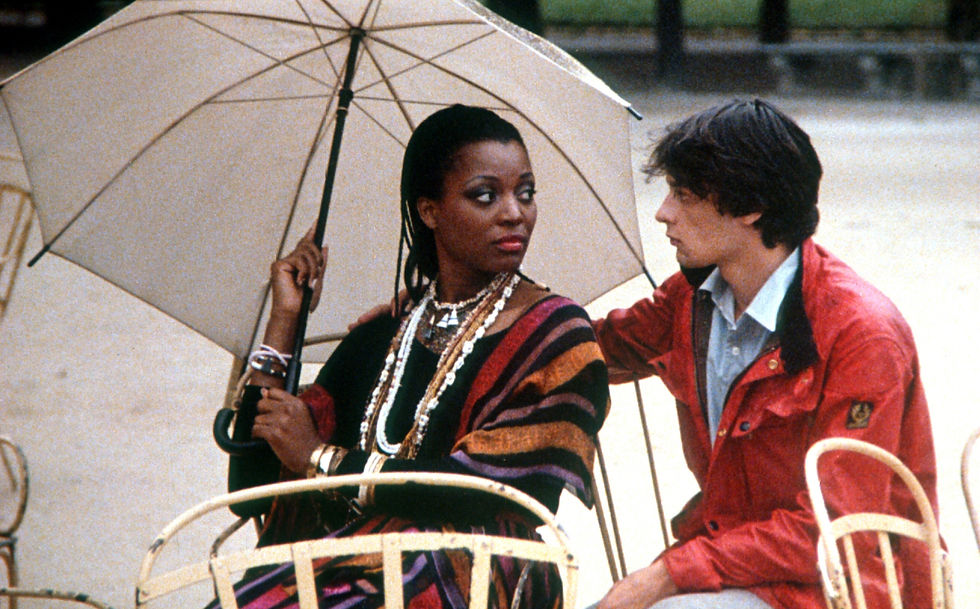
Diva is one of the titles I had previously seen, but wanted to catch on an IMAX screen. Jules, a young postal carrier, tapes the concert of a reclusive opera singer who avoids recording and distributing her own voice. After the concert, he unknowingly becomes embroiled in a web of crime, receiving violent threats from Taiwanese bootleggers after his tape and a web of conspiracy involving the abuse of power of a local police chief, in which a sex worker has ended up dead.
The film's attention to set design and cinematography remains the central focus and method of evocation. French critic Raphaël Bassan posits Diva as the first film in the French movement called Cinéma du look, whose engaging visual style contrasted the alienation of its central characters. A heavily stylised crime thriller wandering through the streets of Paris, the characters reflect this deeply cynical experience of unmooredness that would come to define the decade.
THE BEAST TO DIE
1980, by Toru Murakawa
[Introduced by Christina Newland]
As a newcomer to Murakawa's work, in retrospect, this feels like the best place to start with his filmography. A disturbing portrait of a man deeply scarred by his job of taking photos of war, the film avoids painting any specific backstory or directly illuding to the causation of trauma seeming to influence the complete void of emotion the main character Kunihikio displays as he navigates Tokyo, planning a bank robbery in which he ropes an impressionable and similarly disaffected young man called Tetsuo into partaking with him. I've written extensively about urban alienation in other articles, and think this film expands on the exploration of masculinity that happened in New Hollywood after the Vietnam War. The Beast to Die is brutal, unnerving in its portrait of how extensive exposure to the very worst of humanity can effect how we operate in the world. Kunihikio's psychopathy is deeply complex and elusive to our need for clear answers and conclusions about the pervasive truth of violence. Characters like this appear more and more within the social fabric of the 21st century, which embeds the constant witnessing of decontextualised violence into our daily lives through the advancement in digital communication devices. I urge people to seek out this restoration if they appreciate Japanese cinema!

MANJI
1964, by Yazuso Masumura
[Introduced by Harriet Taylor]
Concluding the weekend, I saw a deeply melodramatic tale of deception and jealousy through complex relational configurations of two married couples, with lesbian desire as the centre and catalyst. Sonoko is a bored, obsessive housewife who falls for the life model Mitsuko at a private art school. What begins as an exploration of Mitsuko's form through the medium of paint, escalates into a deeply paranoid web of impulsivity, irrational worship and intentional deception. You can never quite be sure who has the upper hand: where the entanglement of lies ends and whether any modicum of truth exists between the two. Manji expands the taboo of queer desire, which here finds its only articulation through the extremes of emotional irrationality often attributed to women and the relationships between them. A slight precursor to the more direct 'sexploitation' that Pink films of the decade begin to flesh out, Manji instead uses the affect of a soap opera to heighten the dramatic unravelling of physical lust. I'm glad to have caught this film after it had sat on my watchlist for years.

-
As you can tell, I love cinema from the 80s - particularly British films that reflect Thatcher's influence on our current realities. A lot of the films I've programmed have been from this era of filmmaking. I feel like Britain's future kinda ended with her, and we have struggled to prophesise a new one in its place. The Against the Grain: 1980s British Cinema thread of this year's festival was beautifully curated and introduced by various people named above.
In retrospect, I wish I could have seen more of the Masumura thread, but a lot of them were on quite late, and by then I was ready for food and relaxation. Sitting still in the cinema all day is unexpectedly exhausting!
I was happy to visit Bristol again. As a city with a lot of character, I find it easy to navigate. Between films, I managed to go to the Museum of Palestine, which is a beautiful grassroots project collecting the history of Palestine and showcasing in incredible detail all the laws and conflicts that have escalated into this new phase of the genocide. I couldn't leave without having a nose in 20th Century Flicks, which is the oldest rental shop in the country with the largest collection, which also houses its own micro-cinema. I hope to return soon.
-
Thank you to Film Hub North for the bursary that allowed me to go to this festival. Important that an outsider in the industry gets an opportunity to attend these things!


Comments